How to Find the Right Influencers for Your Brand (Complete Guide)
Not all influencers are created equal. Learn how to find influencers who are genuinely aligned with your brand, audience, and goals — with a step-by-step vetting process that saves you time and budget
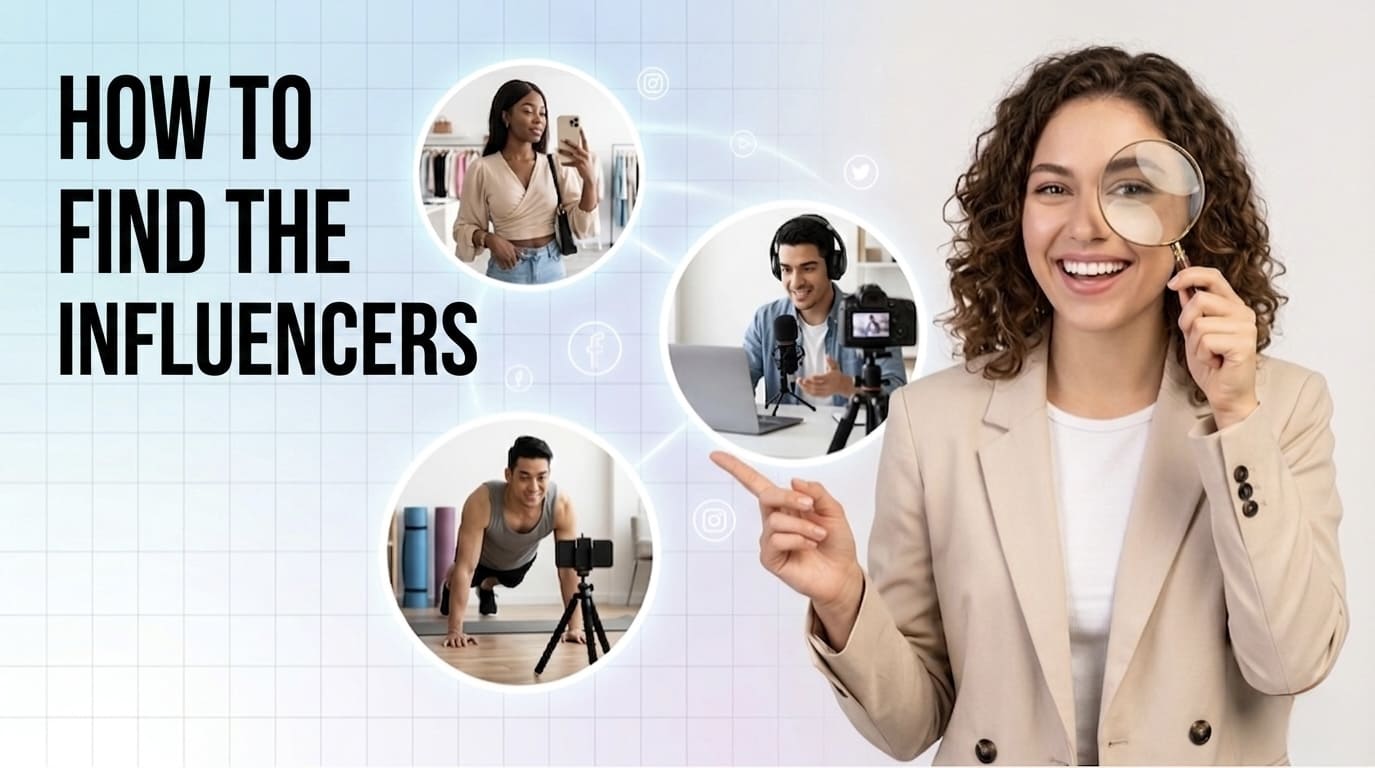
How to Find the Right Influencers for Your Brand (The Complete Guide)
Influencer marketing is one of the fastest-growing channels in digital marketing — but it's also one of the easiest to waste money on. Brands lose thousands of dollars every year partnering with influencers whose audiences have zero interest in their product.
The good news? Learning how to find influencers who are genuinely aligned with your brand is a skill — and a learnable one. This guide walks you through every step, from setting goals to sending your first outreach email.
Whether you're a startup testing influencer marketing for the first time or a seasoned marketer looking to sharpen your process, you'll find a clear, actionable framework here.
📋 What You'll Learn
- Why Finding the Right Influencer Matters More Than Finding a Famous One
- Step 1 — Define Your Campaign Goals Before You Search
- Step 2 — Know Your Audience First
- Step 3 — Understand the Influencer Tiers
- Step 4 — Where to Actually Find Influencers
- Step 5 — How to Vet an Influencer (The 7-Point Checklist)
- Step 6 — Red Flags to Watch Out For
- Step 7 — How to Reach Out (Without Getting Ignored)
- Best Tools to Find Influencers in 2025
- Final Thoughts
Why Finding the Right Influencer Matters More Than Finding a Famous One
The biggest mistake brands make is chasing follower counts. It feels intuitive — more followers means more eyeballs, which means more sales, right? Not quite.
A fitness influencer with 2 million followers probably won't help your B2B SaaS product. A niche personal finance creator with 40,000 highly engaged followers absolutely might. Relevance and trust beat reach almost every time.
Here's why it matters so much:
- Audience alignment — If an influencer's followers match your target customer profile, conversion rates skyrocket.
- Content authenticity — Influencers who genuinely fit your brand create more believable, organic-feeling content.
- Long-term partnerships — The right influencer can become a true brand advocate, not just a one-time paid post.
- Better ROI — Targeted relevance consistently outperforms raw reach in cost-per-acquisition metrics.
The entire process we're going to walk through is designed around one goal: finding influencers whose audiences already want what you're selling.
Step 1 — Define Your Campaign Goals Before You Search
Before you open a single discovery tool or type a hashtag into Instagram's search bar, you need clarity on what success looks like. Your goals will determine what type of influencer you need, what platform to focus on, and what metrics matter.
Common influencer marketing goals include:
- Brand awareness — Reaching new audiences who haven't heard of you
- Product launches — Creating buzz around a new release
- Direct sales / conversions — Driving purchases with trackable links or promo codes
- Content creation — Generating authentic UGC (user-generated content) you can repurpose
- Community building — Growing your brand's own social following
- SEO and backlinks — Getting mentions and links from authoritative creator websites
Your goal shapes everything. Awareness campaigns can work with macro-influencers even if engagement is lower. Conversion campaigns almost always perform better with micro or nano influencers whose audiences trust them deeply.
💡 Pro Tip: Set a specific, measurable goal before starting. "I want more awareness" isn't a goal. "I want 50,000 new impressions and 500 link clicks within 30 days" is a goal — and it tells you exactly which influencers to target.
Step 2 — Know Your Audience First
You cannot find the right influencer if you don't deeply understand who you're trying to reach. Your ideal influencer's audience should be a mirror of your ideal customer.
Build a clear picture of your target audience by mapping out:
- Demographics — Age, gender, location, income level, education
- Interests and hobbies — What do they care about beyond your product category?
- Platform behavior — Are they scrolling TikTok, reading newsletters, or watching YouTube?
- Pain points — What problem does your product solve for them?
- Purchase behavior — Are they impulse buyers or researchers? Do they trust peer recommendations?
Once you have this clearly defined, you're no longer searching for "influencers in my niche" — you're searching for creators your specific audience already follows and trusts. That's a fundamentally different, much more targeted approach.
Step 3 — Understand the Influencer Tiers
Influencers are typically segmented by follower count, and each tier has a different cost, engagement profile, and best use case. Understanding this before you search saves you enormous time.
| Tier | Follower Range | Avg. Engagement Rate | Best For |
|---|---|---|---|
| Nano | 1K – 10K | 5% – 10%+ | Hyper-targeted niches, authentic UGC, low-budget testing |
| Micro | 10K – 100K | 3% – 7% | Niche authority, high trust, best ROI for conversions |
| Macro | 100K – 1M | 1% – 3% | Broad reach, brand awareness, product launches |
| Mega / Celebrity | 1M+ | 0.5% – 1.5% | Mass awareness, PR moments, prestige association |
For most brands — especially those early in their influencer marketing journey — micro-influencers offer the best balance of reach, trust, and cost. Their audiences are smaller but far more engaged, and their recommendations carry real weight.
A smart strategy often combines tiers: a handful of macro influencers for reach, supplemented by a larger pool of micro and nano creators for depth and conversion.
Step 4 — Where to Actually Find Influencers
Now that you know what you're looking for, here's where to find them. There are several approaches, each with its own advantages.
1. Search Hashtags on Social Platforms
Start with the platforms your audience uses most. On Instagram and TikTok, search for hashtags relevant to your product category. Look at who's creating content around those tags consistently — not just the top posts, but the "Recent" feed where mid-tier and micro creators live. On YouTube, search for your product category and look at channels with consistent views even if the subscriber count isn't huge.
2. Look at Who's Already Talking About You
Search your brand name and product names across platforms. You may already have fans creating content about you — and these organic advocates make the most authentic influencer partners.
3. Check Your Competitors
Look at who's partnering with competing brands in your space. If an influencer has successfully promoted a competitor's product, there's a strong chance their audience is relevant to yours.
4. Use an Influencer Discovery Platform
Manually searching social platforms works, but it's slow. Dedicated platforms let you filter by niche, follower count, engagement rate, location, and audience demographics — dramatically speeding up your process.
Platforms like Strwbery's influencer discovery tool let you search and filter thousands of verified creators so you can find qualified influencers in your niche in minutes rather than days.
5. Attend Industry Events and Communities
Niche creators often congregate in Discord servers, Substack communities, Reddit threads, and industry events. Participating in these spaces gives you organic access to emerging creators before they're on anyone else's radar.
6. Ask Your Existing Customers
Survey your most loyal customers: "Do you follow any creators or accounts about [your category]?" These are exactly the influencers your target audience already trusts.
Step 5 — How to Vet an Influencer (The 7-Point Checklist)
Finding candidates is only half the work. Before you reach out to any influencer, put them through this vetting process. Skipping this step is how brands waste their budget.
- Audience Authenticity — Check for fake followers using tools like HypeAuditor or Modash. A 15–20% fake follower rate is common; anything above 30% is a red flag. Look for sudden follower spikes in their growth chart.
- Engagement Rate — Divide total average likes + comments by follower count. Compare against the tier benchmarks above. If a 100K-follower creator is averaging 200 likes per post, something's wrong.
- Audience Demographics — Ask for a media kit or use a discovery tool to verify their audience matches your target customer — age, location, and gender split.
- Content Quality and Brand Alignment — Scroll through their last 30–60 days of content. Does their tone and values feel consistent with your brand? If it would feel forced, it probably will be.
- Past Brand Partnerships — How do they handle sponsored content? Do they clearly label it? A creator who does too many brand deals can suffer from "sponsorship fatigue."
- Niche Relevance — Is this creator consistently in your space, or do they bounce between topics? Niche consistency builds audience trust over time.
- Comment Quality — Read the comments on their posts. Are they substantive and conversational, or just emojis and "Great post!"? Genuine conversations indicate a real, trusted relationship with their audience.
Step 6 — Red Flags to Watch Out For
Even after a promising initial search, some influencers won't be the right fit. Here are the warning signs that should give you pause:
- 🚩 Engagement pods — Groups of creators who artificially inflate each other's likes and comments. If you see the same 10 accounts commenting on every single post, be suspicious.
- 🚩 Inconsistent niche — Creators who post about wildly different topics week to week often lack a dedicated, trust-based audience.
- 🚩 No media kit or audience data available — Professional creators are prepared. If someone can't share basic stats, that's a concern.
- 🚩 Controversial history — Do a quick Google search of their name + "controversy." One bad news cycle can drag your brand into it.
- 🚩 Overpriced for their actual impact — Always ask for case studies or performance data from past campaigns.
- 🚩 Doesn't use the type of product you sell — If a beauty influencer has never mentioned skincare in 3 years of content, your skincare partnership will feel inauthentic.
Step 7 — How to Reach Out (Without Getting Ignored)
You've found a shortlist of vetted influencers. Now it's time to make contact. Influencers — especially mid-tier and above — receive dozens of brand pitches weekly. Here's how to stand out.
Do Your Homework First
Reference something specific about their content in your outreach. Mention a recent video or post you genuinely enjoyed. Generic "We love your content!" openers get deleted. Specific, genuine observations get read.
Lead With Value, Not Ask
Don't open with "We want you to promote our product." Open with the value they get: free products, fair compensation, long-term partnership potential, creative freedom, exclusive access.
Keep It Short
Your first message should be 3–5 sentences maximum — who you are, why you thought of them specifically, what you're proposing, and a simple call to action. Save the full brief for after they express interest.
Use the Right Channel
Many creators prefer email for business inquiries — check their bio or "About" page. For smaller creators, a well-crafted DM on their most active platform works perfectly well.
Follow Up (Once)
If you don't hear back within a week, one polite follow-up is appropriate. More than that crosses into harassment. If they don't respond after two attempts, move on.
💡 Pro Tip: Always give influencers creative freedom within your guidelines. Overly scripted partnerships produce stiff, low-performing content. Tell them your key message and let them tell it in their voice.
Best Tools to Find Influencers in 2025
Doing all of this manually is possible for your first few partnerships — but if you want to run a sustainable influencer program, you need the right tools.
Discovery & Search Platforms
- Strwbery — A powerful influencer discovery platform that helps brands find, vet, and connect with creators across niches. Filter by engagement, audience demographics, category, and more.
- Modash — Excellent for audience demographic analysis and finding lookalike influencers.
- Upfluence — Strong for e-commerce brands, integrates with Shopify and WooCommerce.
- Creator.co — Good for nano and micro-influencer campaigns at scale.
Audience & Fraud Analysis
- HypeAuditor — Industry standard for fake follower detection and audience quality scoring.
- Heepsy — Affordable option with solid audience authenticity filters.
Outreach & Campaign Management
- Grin — Full-suite influencer CRM, great for managing ongoing partnerships.
- AspireIQ — Well-suited for community-based influencer programs.
- Hunter.io — Helps find professional email addresses for outreach.
For brands just getting started, Strwbery's influencer marketplace handles discovery, vetting, and initial outreach in one place — which is exactly what you need before investing in a full campaign management suite.
📥 Free Download: The Influencer Vetting Checklist
Get our one-page PDF checklist of the 7 things to verify before partnering with any influencer — so you never waste budget on the wrong creator again.
Download the Free Checklist →
Final Thoughts
Learning how to find influencers the right way is one of the highest-leverage skills in modern marketing. Done well, a single great influencer partnership can generate more brand trust than months of paid advertising. Done poorly, it's an expensive lesson in the difference between followers and fans.
The process isn't complicated, but it does require discipline:
- Start with clear goals
- Know your audience deeply
- Choose the right influencer tier for your objective
- Search smart — use platforms and hashtags strategically
- Vet rigorously before committing
- Reach out with genuine, personalized pitches
- Give creators creative freedom within your brief
The brands winning at influencer marketing right now aren't the ones with the biggest budgets — they're the ones who've built authentic relationships with creators whose audiences genuinely care about what they sell.
Ready to start building your influencer roster? Browse verified influencers on Strwbery and filter by niche, follower count, and audience demographics to find your perfect match today.
Continue Reading
Related influencer marketing insights
Influencer Marketing for Travel Brands: Complete Guide (2026)
Discover how travel brands use influencer marketing to build trust and drive bookings. Learn campaign types, creator selection tips, and how UGC boosts ROI
Top 10 Dance Influencers in India on Instagram in 2026
Discover the top 10 dance influencers in India on Instagram in 2026 — from Awez Darbar’s 30M+ followers to rising stars shaking up the scene. Find the perfect creator for your next influencer marketing campaign.
Top 10 Mom Influencers in India 2026
India is home to some of the most influential mom creators on Instagram, and in 2026, their impact on parenting culture and brand marketing has never been stronger. From Bollywood celebrities like Neha Dhupia and Debina Bonnerjee to niche experts like Dr. Pallavi Rao Chaturvedi, these women are shaping how millions of Indian mothers think, shop, and raise their children.