Influencer Marketing for Travel Brands: Complete Guide (2026)
Discover how travel brands use influencer marketing to build trust and drive bookings. Learn campaign types, creator selection tips, and how UGC boosts ROI
Influencer Marketing for Travel Brands: The Complete Guide (2026)
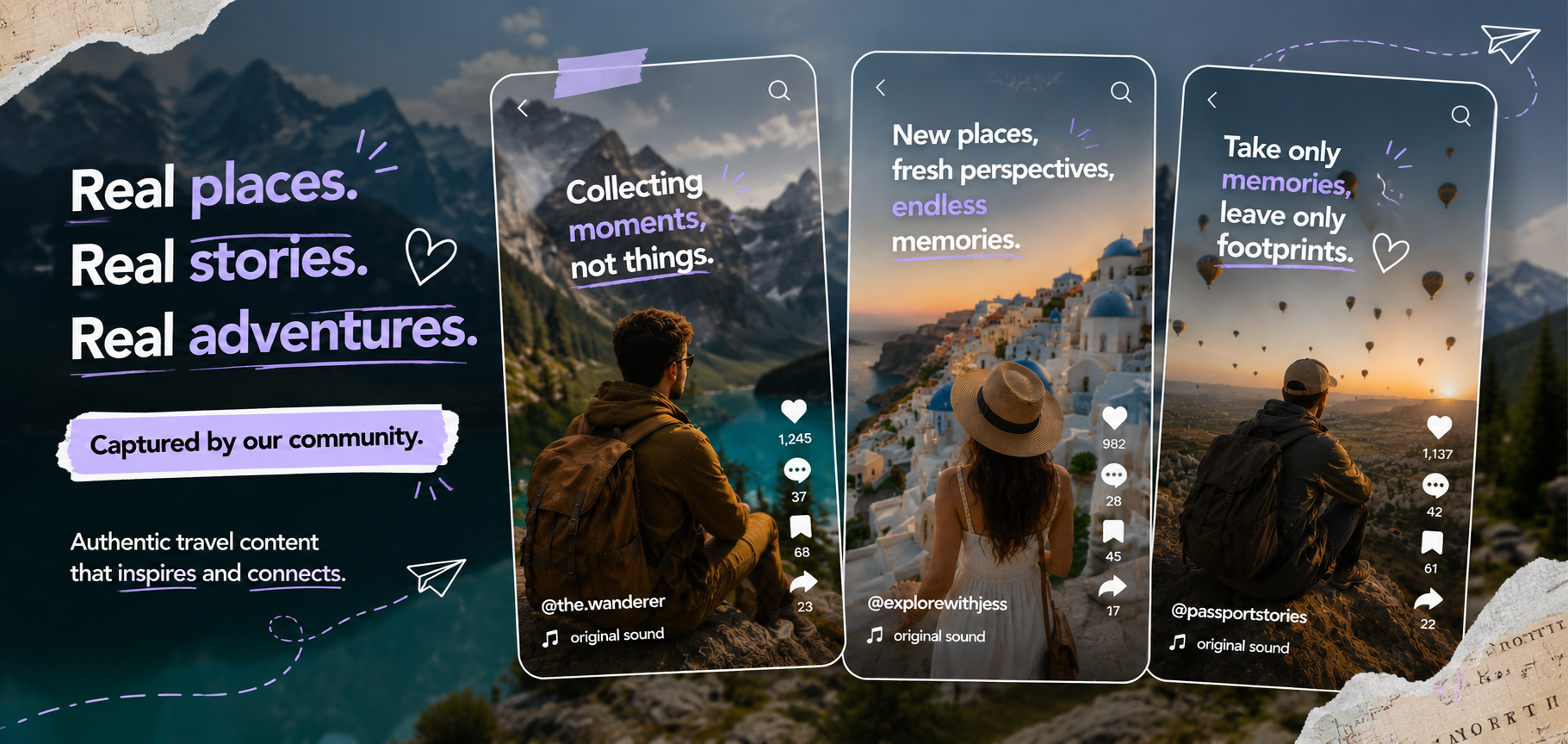
Travel is one of the most visual, emotion-driven categories in marketing — and also one of the hardest to sell through traditional advertising. A banner ad can tell people a destination is beautiful. It can't make them feel the way a real traveler's Reel does when they're standing on a rooftop in Santorini or biting into street food in Bangkok. That emotional, first-person proof is exactly why influencer marketing has become the single most effective channel for travel brands — from boutique resorts to global OTAs to airlines and tourism boards.
This guide breaks down how influencer marketing works specifically for the travel industry, why it outperforms traditional advertising, how it pairs with a UGC content agency for scalable content production, and how to build a campaign that actually drives bookings — not just likes.
Why Influencer Marketing Works So Well for Travel Brands
1. Travel Decisions Are Emotional, Not Just Logical
People don't book a trip because of a discount code alone — they book because they've imagined themselves there. A creator's video of themselves waking up in an overwater villa or hiking a scenic trail does something a brochure never can: it lets the viewer project themselves into that moment.
2. High-Intent, High-Consideration Purchases
Travel bookings are considered purchases — people research extensively before committing. Influencer content acts as social proof at exactly the moment a potential traveler is comparing destinations, hotels, or experiences.
3. Visual-First Platforms Are a Natural Fit
Instagram, YouTube, and TikTok are inherently visual, and travel content performs exceptionally well across all three. A single well-produced Reel from a destination can do more to drive interest than a month of static ad creative.
4. Trust Transfers From Creator to Brand
When a travel creator with an engaged, niche audience recommends a resort or airline, that trust transfers to the brand. This is far more persuasive than a paid ad, especially for younger travelers who actively avoid traditional advertising.
Types of Influencer Marketing Campaigns for Travel Brands
1. Destination Takeovers
A creator is hosted at a property or destination for a few days, documenting their experience across Reels, Stories, and YouTube. This works well for resorts, tourism boards, and travel packages looking to build aspirational awareness.
2. Review and Experience-Based Content
Honest, detailed reviews of hotels, flights, or tour experiences help build trust with travelers who are deep in the research phase — often the deciding factor between two similar options.
3. Micro-Influencer Campaigns for Niche Audiences
Instead of one large creator, brands work with several micro-influencers (10K-100K followers) across niches like solo travel, luxury travel, budget backpacking, or family travel. This drives more targeted reach at a lower cost per campaign.
4. UGC-Style Content for Paid Ads
Not every piece of content needs a creator's personal audience attached. Many travel brands now commission UGC-style content — created by travel creators or everyday customers — purely to fuel paid social campaigns. This is where a UGC content agency becomes invaluable, producing authentic, native-style content optimized for performance rather than organic reach.
5. Affiliate and Long-Term Ambassador Programs
Rather than one-off collaborations, some travel brands build ongoing relationships with a small group of creators who return to their properties or use their services repeatedly, building long-term brand association and trust.
How Influencer Marketing and UGC Work Together for Travel Brands
It's important to understand the distinction between the two, because most successful travel brands use both strategically:
- Influencer marketing focuses on reach and brand awareness by leveraging a creator's existing, trusted audience. It's ideal for destination awareness, brand building, and organic discovery.
- UGC content focuses on producing high-converting content assets — testimonials, POV videos, "what to expect" style content — that brands then use in their own paid ad campaigns, website, and email marketing.
A well-rounded strategy uses influencer collaborations to build awareness and trust at the top of the funnel, while a UGC content agency supplies a steady stream of conversion-focused content to retarget interested travelers further down the funnel. You can read more about how these two approaches complement each other in our detailed guide on influencer marketing.
How to Choose the Right Influencers for a Travel Campaign
1. Prioritize Relevance Over Follower Count
A creator with 40K genuinely engaged travel-focused followers will typically outperform a generalist creator with 400K followers who rarely covers travel content.
2. Check Engagement Quality, Not Just Numbers
Look at comments, not just likes. Are people asking questions about the destination? Tagging friends? That's a sign of real influence and purchase intent.
3. Match Audience Demographics to Your Ideal Traveler
A luxury resort should look for creators whose audience skews toward higher-income, experience-driven travelers — not budget backpackers, even if the latter has a bigger following.
4. Evaluate Content Quality and Storytelling Ability
Since travel content is highly visual, prioritize creators who can shoot and edit well, or who work with a videographer. Weak production quality undercuts even the best destination.
Building a Travel Influencer Campaign: Step-by-Step
- Define your campaign goal: Are you building awareness for a new property, driving bookings for a seasonal offer, or generating content for paid ads?
- Identify your target traveler persona: Solo traveler, family, luxury seeker, budget backpacker — this shapes which creators you approach.
- Select the right creator mix: Combine a few mid-tier creators for reach with several micro-influencers for authenticity and niche targeting.
- Host or brief creators clearly: Provide a content brief covering key selling points, must-capture moments, and platform-specific formats (Reels vs. long-form YouTube).
- Repurpose content across channels: Don't let content live only on the creator's page — repurpose it (with usage rights) for your website, paid ads, and email campaigns.
- Track performance beyond vanity metrics: Monitor click-throughs, landing page visits, and actual bookings attributed to the campaign, not just likes and views.
Common Mistakes Travel Brands Make with Influencer Marketing
- Chasing follower count over fit: A mismatched creator, even a large one, rarely drives real bookings.
- No clear content brief: Without guidance, creators may miss key selling points or produce content that doesn't align with brand positioning.
- Ignoring usage rights: Failing to secure rights to repurpose content for ads or marketing means losing out on the campaign's full value.
- One-off campaigns with no follow-up: Long-term creator relationships tend to build more trust and better ROI than single sponsored posts.
- Not pairing influencer content with performance content: Relying solely on organic reach without a UGC-driven paid strategy leaves significant growth on the table.
Measuring ROI on Travel Influencer Campaigns
Travel brands should track a combination of the following metrics to evaluate true campaign performance:
- Engagement rate: Comments, saves, and shares matter more than raw likes for gauging genuine interest.
- Referral traffic: Use UTM-tagged links to measure how much traffic a creator sends to your booking page.
- Conversion rate: Track how many referred visitors actually complete a booking or inquiry.
- Content reusability: Factor in the value of content assets you can repurpose across paid and organic channels long after the campaign ends.
- Brand sentiment: Monitor comments and DMs for shifts in how your brand is perceived following a campaign.
Frequently Asked Questions (FAQs)
1. Why is influencer marketing effective for travel brands?
Travel is a highly visual, emotion-driven category. Influencer content shows real people experiencing a destination, hotel, or service, which builds trust and helps potential travelers picture themselves there — something traditional ads struggle to do.
2. What's the difference between influencer marketing and UGC for travel brands?
Influencer marketing leverages a creator's existing audience to build awareness and trust. UGC (User-Generated Content) focuses on producing authentic, native-style content — often through a UGC content agency — that brands use in paid ads, websites, and email campaigns, regardless of the creator's follower count.
3. How much does a travel influencer campaign cost?
Costs vary widely based on creator tier. Micro-influencers (10K-100K followers) may charge anywhere from a few thousand rupees to a few hundred dollars per post, while mid-tier and macro creators can charge significantly more, especially for destination takeovers involving travel and stay.
4. Should travel brands work with micro-influencers or macro-influencers?
Both have a role. Micro-influencers typically offer higher engagement and more targeted, niche audiences (like solo travel or budget backpacking), while macro-influencers offer broader reach for brand awareness campaigns. Many brands use a mix of both for balanced results.
5. How do travel brands measure ROI from influencer campaigns?
Beyond likes and views, brands should track engagement quality, referral traffic via UTM links, conversion rates on bookings, and the long-term value of reusable content assets across paid and organic channels.
6. Can influencer content be reused in paid ads?
Yes, but only if usage rights are clearly agreed upon with the creator beforehand. Many travel brands negotiate content usage rights upfront so influencer content can be repurposed for paid social, website galleries, and email marketing.
7. How is a UGC content agency different from an influencer marketing agency?
A UGC content agency focuses on producing conversion-optimized content assets — testimonials, POV videos, and review-style content — often without relying on a creator's personal following. An influencer marketing agency focuses on identifying, negotiating with, and managing creators for reach and brand awareness campaigns.
8. What type of content works best for travel influencer campaigns?
Destination takeovers, honest hotel or experience reviews, "day in the life" travel vlogs, and POV-style Reels tend to perform best, as they combine aspirational storytelling with practical, trust-building information for travelers researching their next trip.
Continue Reading
Related influencer marketing insights

Top 10 Dance Influencers in India on Instagram in 2026
Discover the top 10 dance influencers in India on Instagram in 2026 — from Awez Darbar’s 30M+ followers to rising stars shaking up the scene. Find the perfect creator for your next influencer marketing campaign.

Top 10 Mom Influencers in India 2026
India is home to some of the most influential mom creators on Instagram, and in 2026, their impact on parenting culture and brand marketing has never been stronger. From Bollywood celebrities like Neha Dhupia and Debina Bonnerjee to niche experts like Dr. Pallavi Rao Chaturvedi, these women are shaping how millions of Indian mothers think, shop, and raise their children.

UGC Content Creation Guide: Everything Brands Need to Know in 2026
92% of consumers trust UGC over traditional advertising. Learn how to build a UGC content strategy that drives results, whether you’re a D2C startup or scaling brand in India.