What Is AI Content Creation and How Does It Work?
Creating content used to mean hours of research, writing, and editing. Today, businesses and creators are turning to AI content creation to produce blogs, social posts, product descriptions, and more — in a fraction of the time. But what exactly is it, and how does the technology behind it work? Let's break it down.
What Is AI Content Creation?
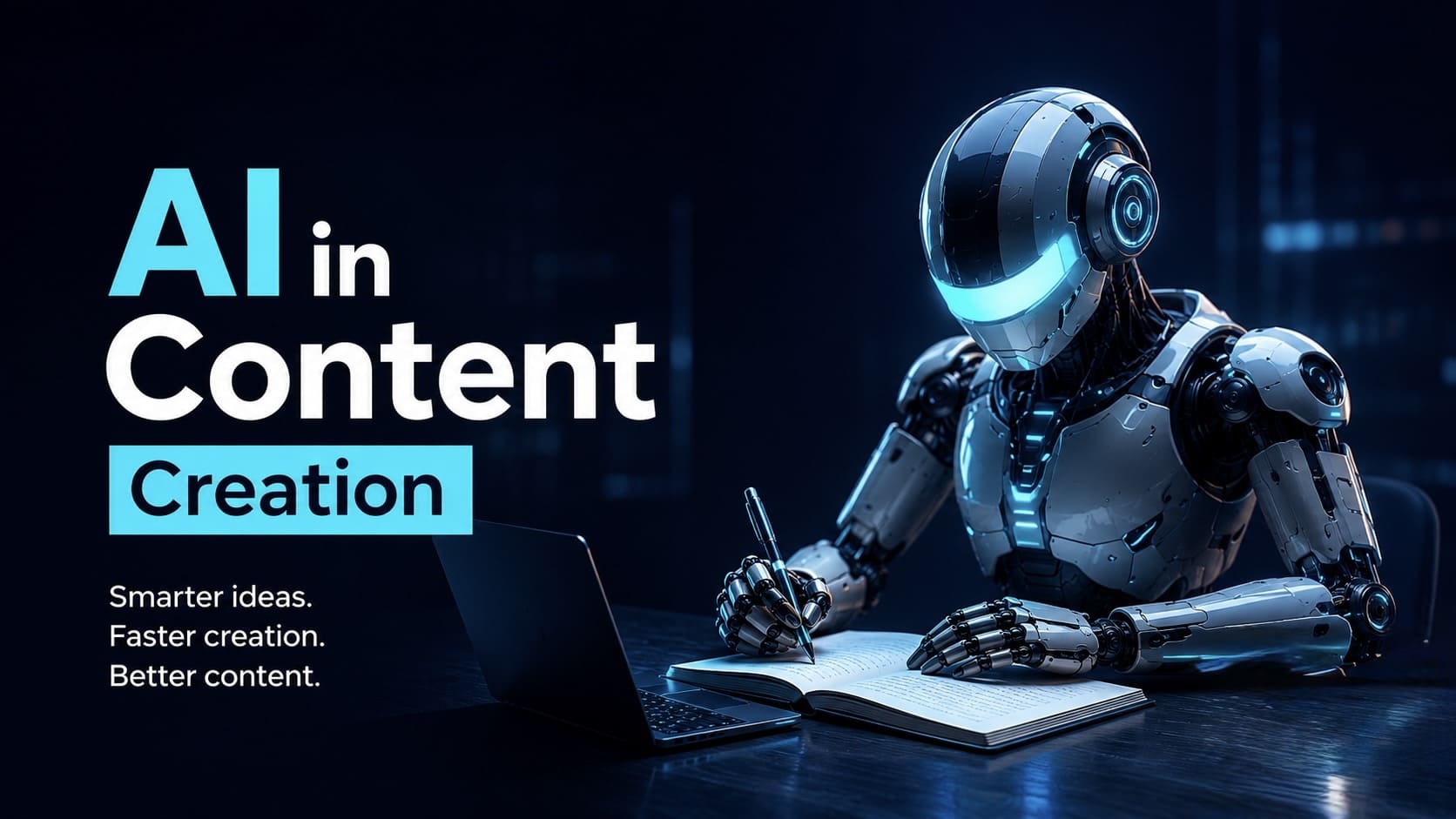
AI content creation is the process of using artificial intelligence tools to generate written, visual, or multimedia content — either automatically or with human guidance. Instead of starting from a blank page, you give an AI tool a prompt or brief, and it produces a draft within seconds.
This covers a wide range of content types, including:
- Blog posts and articles
- Social media captions and ad copy
- Product descriptions and landing pages
- Email newsletters and sequences
- Video scripts and podcast outlines
The key thing to understand is that AI does not replace human creativity — it accelerates it. Most professionals use AI to generate a first draft, then a human editor refines it for accuracy, tone, and brand voice. If you're exploring AI content creation tools for your business, this human-in-the-loop approach delivers the best results.
How Does AI Content Creation Work?
Behind every AI writing tool is a large language model (LLM) — a type of AI trained on enormous amounts of text data from the web, books, and other sources. Here is how the process works step by step.
1. Training on Text Data
The AI learns language patterns by processing billions of words during training. It develops a statistical understanding of how sentences are structured, how topics are explained, and how tone shifts across different types of writing. It does not memorize facts — it learns patterns.
2. You Provide a Prompt
When you type an instruction — like "Write a blog post about the benefits of email marketing" — the AI processes it and begins generating a response. It predicts the most fitting next word, then the next, building a full piece of content token by token.
3. The AI Generates a Draft
Within seconds, the tool produces a complete draft. The quality depends heavily on how detailed and clear your prompt is. A well-structured brief with audience details, tone guidance, and key points will produce significantly better output than a vague one-liner.
4. Human Review and Editing
AI output always needs a human review before publishing. You check for accuracy, add brand-specific examples, adjust the voice, and verify any facts or statistics cited. This editing step is what separates trustworthy content from generic AI filler.
Key Benefits of AI Content Creation
Speed and Scale
What takes a writer two to three hours can be drafted in minutes. For businesses that need to publish regularly across multiple channels, this speed is a genuine competitive advantage.
Cost Efficiency
AI tools allow smaller teams to produce a higher volume of content without adding headcount. This makes professional-quality content more accessible to businesses of all sizes.
SEO at Scale
Targeting more keywords, building topic clusters, and keeping content updated are all easier when AI handles the heavy lifting of drafting. AI-powered content creation is helping brands grow their organic visibility faster than traditional workflows allow.
Overcoming Writer's Block
Even experienced writers get stuck. AI tools are excellent at generating outlines, suggesting angles, and producing a rough draft to react to — giving writers something to work with instead of a blank page to fill.
Limitations to Know
Being realistic about what AI cannot do is just as important as understanding what it can.
- Accuracy issues: AI can confidently state incorrect facts. Always fact-check before publishing.
- Generic tone: Default AI output tends to sound pleasant but bland. Brand voice requires careful prompting and editing.
- No original experience: AI cannot share a personal story, conduct original research, or offer a genuinely novel perspective. That still comes from humans.
- Thin content risks: Publishing large volumes of low-effort AI content can hurt SEO rather than help it. Quality still matters.
Does AI Content Rank on Google?
Google's position is straightforward: it rewards helpful, high-quality content regardless of how it was produced. AI-generated content that is accurate, well-structured, and genuinely useful to readers can rank well. AI content that is thin, repetitive, or exists only to game search engines will not.
The brands succeeding with AI content creation for SEO treat AI as a production accelerator — not a shortcut around quality.
Who Is Using AI Content Creation?
Adoption spans industries and business sizes:
- E-commerce brands use AI to write product descriptions at scale across large catalogs.
- Marketing agencies use it to increase client output without growing headcount.
- Solo bloggers and creators use it to draft posts faster and stay consistent.
- SaaS and tech companies use it for blog content, help docs, and in-app copy.
Frequently Asked Questions
Does Google penalize AI-generated content?
No — Google penalizes low-quality and spammy content, not AI content specifically. Well-edited, accurate, and helpful AI-assisted content is treated the same as human-written content in search rankings.
How much editing does AI content need?
It depends on the topic and your quality bar. At minimum, you should always fact-check claims, adjust the tone for your brand voice, and add any specific examples or insights a general AI draft would miss.
Can small businesses benefit from AI content creation?
Absolutely. AI tools level the playing field by letting small teams produce content at a volume that previously required large writing operations. It is one of the fastest ways for a small business to grow its content presence without blowing the budget.
What types of content can AI create?
AI tools can generate blog posts, product descriptions, email copy, social media captions, ad headlines, video scripts, landing page copy, and more. Newer multimodal tools also generate images, audio, and short video content from text prompts.
Is AI content creation ethical?
Used responsibly, yes. The main ethical considerations are transparency about AI involvement, ensuring factual accuracy, and avoiding reproduction of copyrighted material. The ethics depend largely on how the tool is used and whether human oversight is part of the process.
What is the best way to get started with AI content creation?
Start with a clear brief — define your audience, goal, tone, and target keyword before generating anything. Use AI for the first draft, then invest human effort in editing and fact-checking. Explore AI content creation platforms built for marketers to find the right fit for your workflow.
Continue Reading
Related influencer marketing insights

Influencer Marketing for Travel Brands: Complete Guide (2026)
Discover how travel brands use influencer marketing to build trust and drive bookings. Learn campaign types, creator selection tips, and how UGC boosts ROI

Top 10 Dance Influencers in India on Instagram in 2026
Discover the top 10 dance influencers in India on Instagram in 2026 — from Awez Darbar’s 30M+ followers to rising stars shaking up the scene. Find the perfect creator for your next influencer marketing campaign.

Top 10 Mom Influencers in India 2026
India is home to some of the most influential mom creators on Instagram, and in 2026, their impact on parenting culture and brand marketing has never been stronger. From Bollywood celebrities like Neha Dhupia and Debina Bonnerjee to niche experts like Dr. Pallavi Rao Chaturvedi, these women are shaping how millions of Indian mothers think, shop, and raise their children.